
Our History
From visionary pioneers to a thriving community. Explore the journey of faith, resilience, and unity that built the Albanian Moslem Society of Shepparton.
A Journey of Faith, Resilience
and Community
Shepparton is home for many people from a wide variety of nationalities. One in ten people now living in Shepparton were born overseas. Albanian migrants were one of the earliest groups to arrive and settle, building a foundation that thrives today.
The Early Arrivals
Albanians from the Korce region began arriving in Shepparton in the mid 1920s. Migration before World War II consisted almost entirely of young single men journeying in search of work.
As seasonal labourers, they found work on farms in rural areas such as Shepparton and in time, they were able to pool sufficient resources to buy small farms of their own.
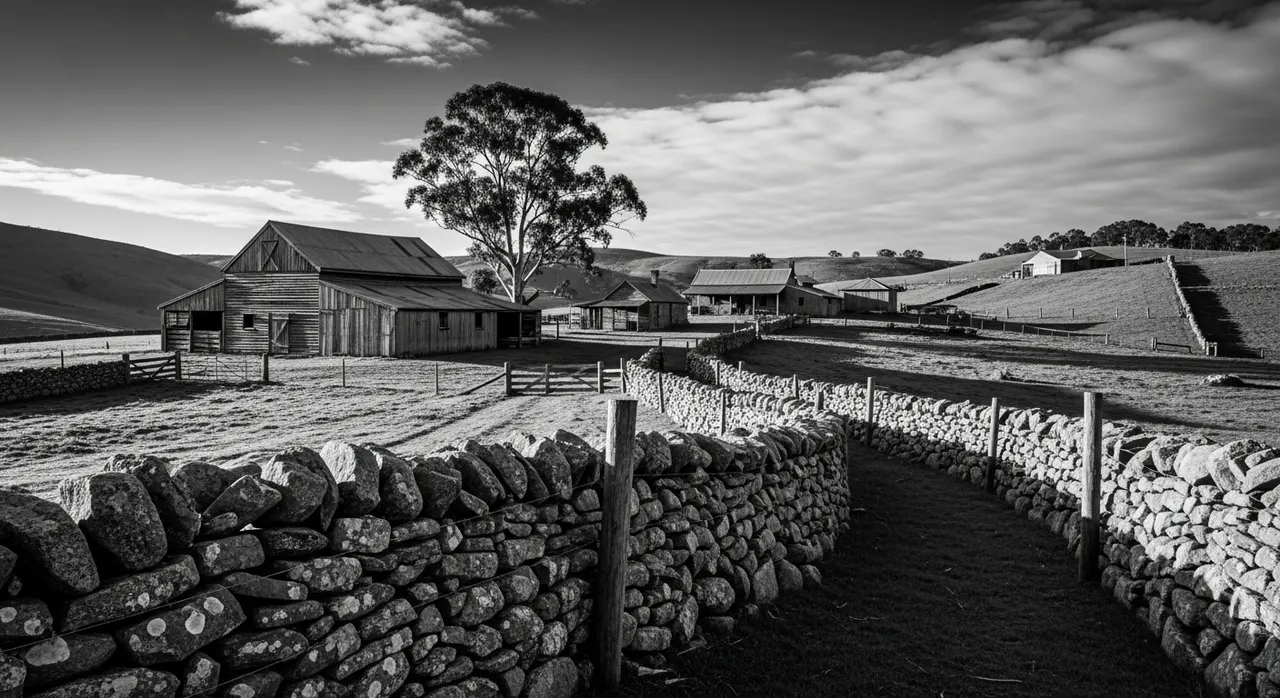
One of Shepparton’s strongest and most established multicultural communities.
Today there are over 3,000 people who lay claim to Albanian heritage. We are the oldest formally recognised Albanian community in Australia.
The Second Wave & Beyond
The second wave of migration in the mid-1990s brought more families from Korce, drawn by long-established contacts in Shepparton.
While most original migrants worked on the land, today's community excels in all professional, business, and community service fields.
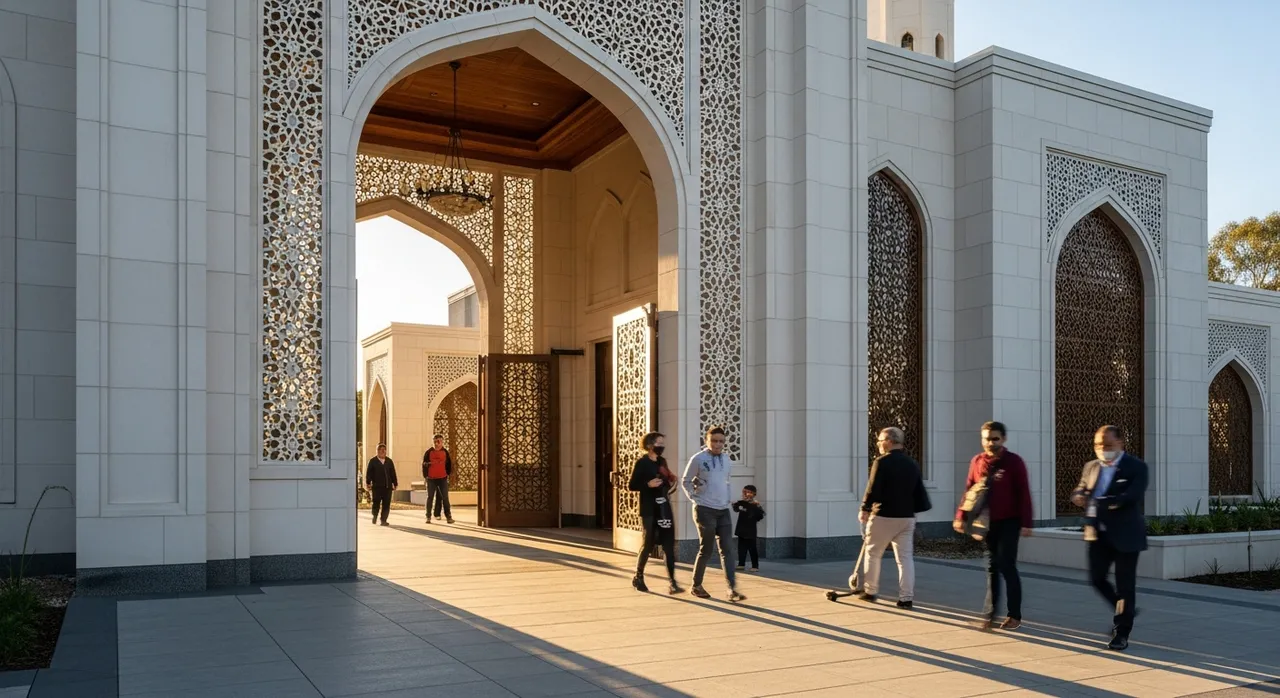
The first purpose-built mosque in Victoria was constructed here in the 1960s, serving as a beacon of our heritage and faith.
Our Story in Pages
The continuing journey of Albanians in Victoria — flip through our history.

Celebrating Albania’s National Day, 28th November.
Perth 1949.
Courtesy Jim emiN
rexhep mustafa hauls sugar cane from his farm in Babinda,
Queensland, 1955.
Courtesy ANgle mustAfA
emin mulla (second left) and his workers on his tobacco
farm in mareeba, Queensland, 1953.
Courtesy rAhime mekA; Nee mullA
Nesim Ahmet and Besim Abedin established the ‘george
Brothers’ carting business in the early 1940s, which helped
expand their farming business in shepparton.
Courtesy riDvAN (riDDi) Ahmet
Zymbyle and selime mehmet on
their family’s cotton farm, Biloela,
Queensland, 1935. the family
eventually settled in shepparton,
victoria, early 1940s.
Courtesy mAry mehmet
skender (george) ismail manually ploughing his land at
launching Place, victoria in the 1930s. the ismail brothers
bought their first farm in 1947 for £5000. the horses,
Prince and Johnny were bought from the geelong Cement
Company after they were retired.
Courtesy skeNDer ismAil
sabri shemshedin’s passport, 5 may, 1962.
Courtesy eNver sABri
sabri shemshedin’s Certificate of entry in Australia, 1928.
Courtesy eNver sABri
hand beaded coin purse given to then 17 year old Neim
Abidin by his mother as a reminder of his heritage when he
left Albania to come to Australia in 1928.
Courtesy fereDA BrAND PhotogrAPher D lorAm
Kurbet… A foreign land
in Albanian, the word kurbet denotes a ‘foreign land’ and is
strongly connected to the long-standing practice of journeying to
‘foreign lands’ in search of work and a livelihood. the term also
refers to temporary or extended residence in a foreign land – a
sort of temporary exile – and eventual return to one’s place of
origin. traditionally, only men of working age undertook kurbet
and they were referred to as kurbetxhi.
this story traces the formation of the Albanian community in
victoria and the transformation of kurbet into a permanent place
of settlement and belonging – a ‘home’.
Although individual and small groups of Albanians had been
journeying to Australia for many years, the beginnings of the
present settlement can be traced to the arrival of a group of
five men from the korçë region of Albania. Bektash muharem,
Bejxhet emini, rexhep mustafa, musa ibrahimi and riza Ali
disembarked in fremantle, Western Australia, on 29 october 1924.
these pioneers played a crucial role in providing later kurbetxhi
with assistance and camaraderie, laying the foundations for a
supportive kurbet community.